Why You Should Open Your SRS Account Right Now
I opened mine in 2019 when the statutory retirement age was 62. That decision locked in an earlier withdrawal date — one I can’t get back if I’d waited. Here’s why timing matters more than most people realise.
Let me tell you the most straightforward financial win available to a working Singaporean that most people either don’t know about or keep putting off.
It’s called the Supplementary Retirement Scheme — SRS for short. I opened mine back in 2019 and have been contributing regularly since. It’s now one of the few financial decisions I make on autopilot every year without second-guessing myself.
If you’re earning a decent income and haven’t opened an SRS account yet, this article is for you. I’m going to explain exactly what it is, why the tax savings are real and meaningful at our income level, and — crucially — why opening it sooner rather than later has a benefit most people completely overlook.
What SRS actually is
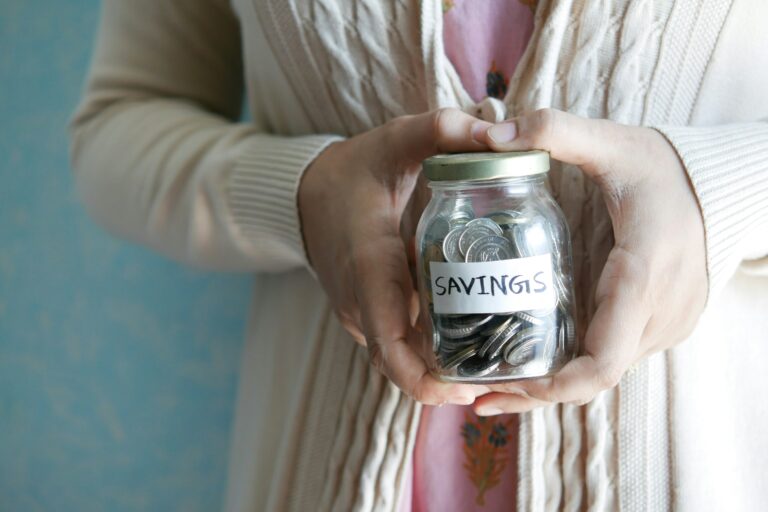
SRS is a voluntary savings scheme run by the government that lets you set aside money for retirement while getting a tax break today.
Here’s the simple version: whatever you contribute to your SRS account this year gets deducted from your taxable income. Less taxable income means less tax paid. The money sits in your SRS account, you invest it, it grows, and you draw it down at retirement.
The annual contribution cap for Singapore Citizens and PRs is $15,300.
That’s the ceiling. You don’t have to hit it — any amount you contribute reduces your tax bill proportionally.
Why it matters more at our income level
This is the part most generic SRS articles gloss over — the benefit varies significantly depending on what you earn.
At an income of $80,000–$120,000 a year, you’re likely sitting in the 11.5% to 15% personal income tax bracket. That means every dollar you put into SRS saves you 11.5 to 15 cents in tax — immediately, this year.
Let’s make that concrete with real numbers.
If you contribute the full $15,300 this year:
- At 11.5% tax bracket → you save roughly $1,760 in tax
- At 15% tax bracket → you save roughly $2,295 in tax
That’s an instant, guaranteed return of 11.5–15% the moment you make the contribution — before your investments have done a single thing.
I’ve been maxing out my SRS contribution at $15,300 annually. The tax saving each year sits somewhere in that $1,700–$2,300 range depending on my income that year. It’s not life-changing money on its own, but it’s money I’d otherwise simply hand to IRAS. I’d rather it compound in my retirement account.
No stock, no ETF, no savings account gives you a guaranteed 11.5–15% return the moment you put money in. This is genuinely one of the best financial moves available at our income level, and it’s sitting there unused for most people.
The reason to open it NOW that nobody talks about
Here’s the thing I wish someone had told me earlier — and the most compelling reason to stop delaying.
Your SRS withdrawal age is locked in at whatever the statutory retirement age is when you make your first contribution.
When I opened my SRS account in 2019, the statutory retirement age was 62. That means I can make penalty-free withdrawals from age 62 — locked in, permanently, regardless of what happens to the retirement age after that.
Here’s why this matters right now: the retirement age is actively rising.
- It was 62 when I opened mine in 2019
- It’s currently 63
- It’s being raised to 64 from 1 July 2026
- It’s expected to reach 65 by 2030
Every year you wait, you risk your SRS withdrawal age being locked in at a higher number. Open it today — even with a token $1 contribution — and you lock in 63 as your withdrawal age before it moves to 64 in July 2026.
That’s potentially two extra years of penalty-free access to your retirement savings, just from opening the account now instead of next year. You can’t retroactively change this once the retirement age has moved.
What to do with the money once it’s in
This trips people up. SRS money sitting in cash inside the account earns almost nothing — 0.05% interest, which is effectively zero. And the numbers are startling: as of end 2024, 19% of total SRS contributions — nearly $4 billion dollars — was sitting idle in cash in SRS accounts across Singapore. Don’t be part of that statistic.
You need to invest it.
The good news: you can invest SRS funds into ETFs, unit trusts, Singapore shares, and robo-advisors. Platforms like Endowus and StashAway accept SRS funds and let you invest them into diversified portfolios similar to what you’d do with cash.
My approach: I treat my SRS investments the same way I treat my Syfe Core portfolio — long-term, diversified, hands-off. Since SRS money is earmarked for retirement anyway, the long horizon actually makes it well-suited for equity investing.
The key thing: open the account, fund it, then invest it. All three steps matter.
The one catch — and it’s not a dealbreaker
SRS money is meant for retirement. Withdrawals before your locked-in statutory retirement age come with a 5% penalty on top of the withdrawal being added to your taxable income for that year.
At retirement age, only 50% of your SRS withdrawals are taxable — which is another built-in benefit. Withdraw $40,000 from SRS in retirement, only $20,000 is added to your taxable income. At typical retirement income levels, you’ll likely pay very little or no tax on it.
The illiquidity is real — don’t put money in that you might need before retirement. Think of it as a separate retirement pot, distinct from your emergency fund and your regular Syfe investments.
The mistake I see people make
They open the account — or intend to — but contribute nothing, or contribute and leave it in cash.
An SRS account sitting empty does nothing. The tax relief only applies to money you actually put in. And the contribution deadline is 31 December each year — contributions after that don’t count for that year’s tax relief.
I’ve spoken to friends who opened the account years ago and never funded it, or funded it and left everything in cash. Every year that passes is both a year of tax savings and investment returns they can’t recover.
If you opened yours and haven’t contributed — fund it before 31 December. If you’ve been leaving it in cash — invest it.
How to open an SRS account in 15 minutes
You open an SRS account through one of three local banks: DBS/POSB, OCBC, or UOB. Pick whichever you already use.
Via DBS/POSB: Log into digibank → Invest → SRS → Apply
Via OCBC: Log into OCBC app → Wealth → SRS → Open Account
Via UOB: Log into UOB TMRW → Investments → SRS
All three are straightforward online applications. You’ll need your NRIC and CPF details. No branch visit required.
Once open, transfer money in before 31 December to capture this year’s tax relief. Then invest the funds — don’t leave them sitting in cash.
The simple case for doing it today
You earn a decent income. You’re paying income tax every year. The government is offering you a legal, straightforward way to reduce that tax bill while building your retirement savings.
The account takes 15 minutes to open. The tax saving on a full $15,300 contribution is $1,700–$2,300 depending on your bracket — guaranteed, this year.
And if you open it before the retirement age moves to 64 in July 2026, you lock in 63 as your withdrawal age permanently. That window is closing.
I opened mine in 2019 and wish I’d known about it even earlier. Every year I didn’t contribute is money I paid in tax that I didn’t need to.
Open it today. Fund it before 31 December. Invest what’s inside. That’s the whole playbook.
I have an SRS account opened in 2019 and contribute the maximum $15,300 annually. This article reflects my personal experience and is not financial advice. Tax brackets, SRS contribution limits, and retirement age figures are accurate at time of writing — always verify current figures at iras.gov.sg before making decisions.